

How to Plan Holiday Activities in Senior Living That Include Every Resident
Holiday calendars in senior living communities can fill up fast, Argentum notes in an article on holiday planning (Argentum). Its point is that for residents, the most meaningful moments might happen in smaller settings, such as sharing a favorite tradition or helping prepare for a gathering (Argentum). The article adds that a personal invitation can be especially meaningful for a resident who recently moved in, is grieving a loss or is far from family (Argentum).
For activity teams, the planning question is how to build a holiday calendar that works for every resident, including the ones who prefer something quieter.
Questions to ask before the calendar is set
Argentum suggests looking at holiday plans through the eyes of individual residents (Argentum). It asks which residents are looking forward to the season, which ones might prefer a quieter gathering, and which would enjoy a role in creating something for others (Argentum).
Its examples include asking a resident who once hosted family dinners to help plan a small gathering (Argentum). For someone who finds large events overwhelming, it suggests arranging a quiet visit (Argentum). For a new resident, it suggests asking which traditions they want to share (Argentum).
It also recommends noticing which residents have stopped coming to familiar activities, then checking in with them about whether their interests, needs or situation changed (Argentum). Argentum adds that the life enrichment team, the care team and the dining team may each see a different piece of that picture (Argentum).
A holiday planning checklist for activity teams
List the residents who are new this season, recently lost someone or have no family nearby. Decide who on the team invites each of them in person.
Pair each large event with a smaller, quieter option in the same week. Offer seated and standing ways to take part in the same session.
Give residents who like to host a role: greeting guests, decorating, choosing music or leading a tradition.
Ask the care and dining teams which residents they have seen less of lately. Check in with those residents before the main events.
Plan some activities that fit a family visit, with room for grandchildren and older relatives at the same table.
After the holidays: keep what residents asked for
Argentum also treats the season as a way to find out what residents want more of once January arrives (Argentum). Its example is a tradition shared at a holiday gathering that might later become a recurring small-group activity (Argentum).
Write down what residents ask to do again. Put those requests on the January calendar before the decorations come down.
Where interactive projection can fit
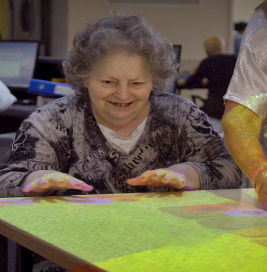
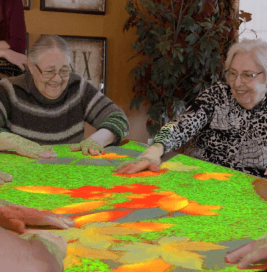
EyeClick's games are activity tools for group play and engagement, not a health intervention. Residents can play the games together with visiting family members. One staff member can lead a group game session for several residents at once.
Games have adjustable difficulty levels so staff can match an activity to each resident's abilities. Obie for Seniors projects games on tables, walls and floors in senior living communities. BEAM Mobile uses a wheeled stand for floor and table projection, without a ceiling-mounted installation, so it can move between rooms.
If you are planning group and family activities for the holiday season, you can see how it works here: See EyeClick's activity systems for senior living.
Related articles
Best Interactive Activity Systems for Senior Living (2026)
8 Benefits of Interactive Games for Older Adults
Senate Hearing Puts Senior Loneliness on the Agenda: What It Means for Activity Programs
Best Interactive Games for Senior Care and Memory Care
Let's Create Something Amazing Together
Whether you're in education, senior care, or entertainment, we're here to help transform your space with interactive technology.