

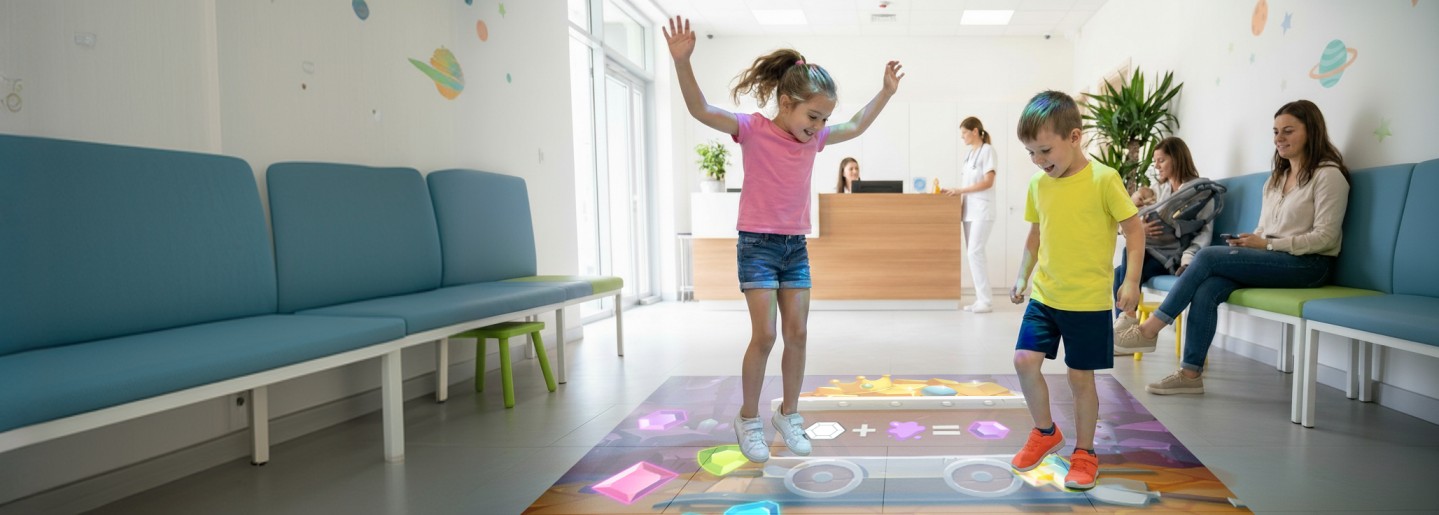
How Clinics and Senior Living Communities Pay for Interactive Therapy Equipment
Interactive therapy equipment is purchased, not reimbursed: clinics fund it through capital and equipment budgets, the Section 179 tax deduction, and equipment financing, while senior living communities use activity budgets, capital plans, gifts, and the occasional state grant. The therapy sessions clinicians run with the equipment are billed the way therapy is always billed, by licensed clinicians under existing service codes, and that services-versus-equipment distinction is the key to every funding conversation on this page.
This guide walks through how PT and pediatric clinics, rehab departments, skilled nursing facilities, and senior living communities actually pay for equipment in the $5,000-$50,000 range, what reimbursement does and does not cover, and which outside funding routes are real versus wishful. 1 rule up front: nothing here is billing, legal, or tax advice. Allowability and billing decisions belong to your billing and compliance team and your tax professional; this page exists so you walk into those conversations informed.
How clinics actually pay for therapy equipment
Most clinics fund equipment purchases from 3 places: the annual capital or equipment budget, the Section 179 deduction that reduces the after-tax cost, and equipment financing that spreads the cost across the months the equipment is in use. Outside grants play a much smaller role for private clinics than most buyers expect, so plan around these 3 first.
Capital and equipment budgets
A purchase in this range is a standard capital line item, and the budget calendar matters more than the price. Private practices typically decide equipment purchases at fiscal year-end planning or mid-year when revenue allows; hospital rehab departments and SNF therapy departments work on an annual capital request cycle, often with submissions due 1 to 2 quarters before the fiscal year starts. If you are inside a larger organization, find out when capital requests are due and get a formal quote in before that date; a request without a quote and a 1-page justification usually waits a year.
Useful framing for the request: an EyeClick system starts at $5,796 for the portable BEAM unit, installs in under 2 hours with no construction, and is movable between rooms, which generally keeps it in the equipment category rather than the facilities-renovation category. Equipment-category purchases tend to have shorter approval chains.
The Section 179 deduction
Section 179 of the US tax code lets a business deduct the full purchase price of qualifying equipment in the year it is placed in service, instead of depreciating it over years. For tax years beginning in 2026, the deduction limit is $2,560,000 with a phase-out beginning at $4,090,000 of total equipment purchases, per current published guidance; a single therapy-equipment purchase sits far below those ceilings. Financed equipment can also qualify, which is why many clinics combine Section 179 with a financing plan.
The required caveat: limits adjust annually, eligibility depends on your entity type and tax situation, and tax-exempt organizations generally cannot use it. Confirm the current-year numbers and your eligibility with your tax professional before counting the deduction in your math.
Equipment financing and leasing
Banks and equipment-finance companies routinely finance clinic equipment in this price range, converting a 5-figure purchase into a monthly operating cost that a known session volume can support. Leasing is the alternative when a clinic prefers to keep the purchase off its balance sheet or expects to upgrade. Terms, rates, and buyout structures vary widely by lender and credit profile, so compare at least 2 offers and have your accountant check how the structure interacts with Section 179. Ask any vendor you buy from, EyeClick included, for a formal quote your lender can underwrite against.
The reimbursement reality: services are billed, equipment is bought
Here is the honest answer to "is this reimbursable": no insurance program reimburses a clinic for buying activity or engagement equipment, and that includes EyeClick. What payers reimburse is the skilled therapy service a licensed clinician delivers to a patient. The equipment a clinician chooses to use during that service, whether it is a balance pad, a set of cones, or an interactive projection system, is a practice investment, the same as the treatment table.
That said, the services clinicians deliver with interactive projection fall into activity categories that PT and OT practices bill every day. Therapists use EyeClick systems during sessions for activity types like weight-shifting and reaching games, target-stepping play, seated reach-and-touch activities, and dual-task play where a patient moves while tracking or counting on the projected surface. The table below maps those activity categories to the CPT codes PT clinics commonly bill for them, for orientation only.
| Activity category a clinician may run | CPT code commonly billed for that category |
|---|---|
| Therapeutic exercise: strength, endurance, range of motion | 97110 |
| Neuromuscular re-education: balance, coordination, posture, weight-shifting | 97112 |
| Gait training: stepping patterns, walking practice | 97116 |
| Therapeutic activities: dynamic, functional, task-based movement | 97530 |
Read this table with 3 disclaimers attached. First, medical necessity is determined by the licensed clinician treating the patient, never by the equipment in the room. Second, what is billable and how it is documented is a question for your clinic's billing and compliance team and your payer contracts. Third, this is educational orientation, not billing or legal advice; codes describe the clinician's skilled service, and using any particular piece of equipment does not change what is billable.
1 related question worth settling: clinic equipment of this type is generally not durable medical equipment for Medicare purposes. Medicare's DME benefit covers items like walkers and hospital beds ordered for a patient's use in the home; equipment a clinic buys for use in its own treatment space is a business asset of the practice, not a billable DME item. If a specific scenario seems borderline, your billing team or Medicare administrative contractor is the right resource.
What this looks like in a clinic. If you want to see the equipment side of that distinction in practice, our PT and OT clinic page walks through how a therapist runs an EyeClick system inside a normal session: choosing the activity, sizing the projected play zone, and setting the challenge level. It is a workflow illustration, not a statement about what any payer covers.
Funding routes for senior living and skilled nursing
Senior living communities buy engagement technology with internal money far more often than with grants, and the internal routes are faster. In rough order of how often we see them work:
- Activity and life-enrichment budgets. The natural home for a system the activity calendar will use weekly. Annual budgets are typically set in Q4 for the following calendar year, so a quote submitted in the fall lands in next year's budget; a mid-year purchase usually needs the executive director to move money.
- Capital improvement budgets. Communities planning a common-area refresh, memory care neighborhood update, or new building regularly fold engagement technology into the capital project, where $5,796-and-up is a small line.
- Resident council, family, foundation, and auxiliary gifts. Many nonprofit communities have a foundation or auxiliary that funds resident-facing projects, and family councils respond well to a visible, specific ask ("fund the interactive projector for the memory care floor"). Senior care systems with 100+ games designed for older adults are exactly the kind of concrete, photogenic project these gifts favor. If you are still evaluating options, our guide to comparing interactive activity systems for senior care walks through what to look for.
- State and local grants for aging and dementia programs. These exist but run in cycles and vary by state. 2 verified 2026 examples of the category: Pennsylvania's Department of Aging ran a 2026 READY Communities grant round funding recreation, music, and art programming for older adults including in long-term care settings, and Minnesota launched an Assisted Living Competitive Grant Program effective January 1, 2026 for projects that improve resident quality of care. Check your state's department of aging or health services grant pages and your Area Agency on Aging; windows are typically 30-60 days, once a year.
- Medicare Advantage plan partnerships. Some Medicare Advantage plans run wellness and fall-prevention initiatives with their network communities and provider partners. There is no promise here, and plan rules tightened in 2026, so frame it as a question, not a plan: if your community or therapy provider partners with MA plans, ask your plan contacts whether any current initiative fits.
And 1 route to take off the list: Civil Money Penalty (CMP) reinvestment funds. CMP funds come up in almost every nursing home funding conversation, but current CMS guidance lists high-dollar, complex technology, such as but not limited to engagement technology, among project types it will not approve. Check your state's current CMP request for applications if you want certainty, but do not build a purchase plan around CMP money. Our grants and funding hub covers the CMP picture in more detail.
Funding routes for pediatric and outpatient clinics
For a private pediatric or outpatient clinic, the honest frame is practice investment: equipment that fills the schedule, differentiates the clinic in a market where families compare waiting rooms and treatment gyms, and serves group programming pays for itself through the business, not through a grant. Run the math the way you would any capital purchase: cost against sessions per week the equipment will touch and the referral and retention story it supports.
2 clarifications save pediatric clinic owners time. First, most "pediatric therapy grants" are family-directed: programs that pay providers or vendors for an individual child's therapy or home equipment. They fund your caseload, not your clinic's capital purchases. Second, genuine outside money for clinic spaces does exist for some: 501(c)(3) clinics and hospital-affiliated programs can approach community foundations, civic organizations, and hospital auxiliaries, and clinics building a dedicated sensory space should read our sensory room funding guide, which covers foundation programs active in 2026.
Buying for a school or a sensory room instead?
Different buyer, different money. Schools and districts have 5 federal funding streams plus state programs mapped in our grants and funding hub, and sensory room projects in any setting have their own dedicated routes in the sensory room funding guide.
Frequently asked questions
Is EyeClick covered by insurance or Medicare?
Can a PT clinic bill for sessions that use an interactive projection system?
Is an interactive projector considered durable medical equipment (DME)?
Can nursing homes use CMP funds to buy engagement technology?
How do senior living communities usually pay for engagement technology?
How much does an EyeClick system cost?
Can we deduct the purchase on our taxes?
Will EyeClick help with our funding request?