

How to Fund a Sensory Room: Grants and Funding Sources for US Schools and Facilities
Most US schools fund sensory rooms with federal formula money the district already receives - IDEA Part B, Title I schoolwide funds, and Title IV-A - combined with state grants, private foundation awards, and community fundraising. Facilities outside K-12, such as therapy clinics, hospitals, and adult day programs, more often combine Medicaid waiver funding (where their state allows it) with foundation grants and donor campaigns.
This guide walks through each source, who qualifies, and how to write the justification paragraph that gets a sensory room approved. It is part of our larger grants and funding hub and pairs with our complete sensory room guide.
| Funding source | Who qualifies | Typical amount | Key restriction |
|---|---|---|---|
| IDEA Part B | districts, when it supports IEP/OT services | district formula allocation | must supplement, not supplant |
| Title I, Part A | Title I schoolwide schools | varies | must fit the approved schoolwide plan |
| Title IV-A | districts (student support) | varies | allowability depends on written justification |
| Doug Flutie Jr. Foundation | nonprofits | up to $15,000 | autism community impact |
| Autism Speaks Local Impact | nonprofits | up to $5,000 | local |
| Medicaid HCBS waiver | clinics, residential, adult day | varies by state | assistive technology / environmental modification only |
First, know your number
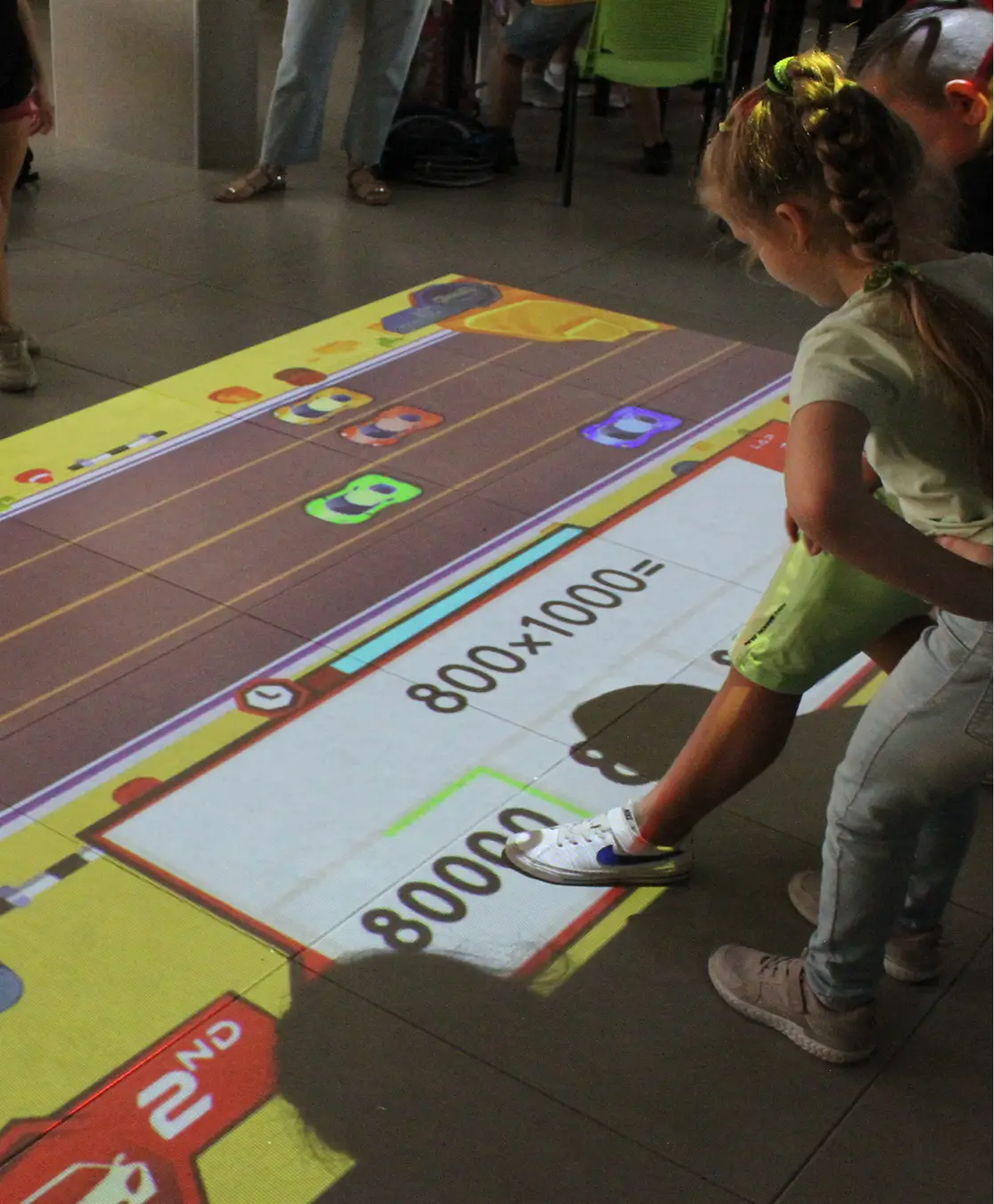
A sensory room budget typically falls between $5,000 and $50,000 depending on room size and equipment mix. An interactive projection system, which turns a floor, wall, or table into a motion-responsive play and regulation surface, starts at $5,796 for a portable unit like BEAM and installs in under 2 hours with no construction.
That last point matters: many funding sources treat capital renovation differently from equipment. A sensory room built from movable equipment, soft furnishings, lighting, and a projection system usually stays in the "equipment and supplies" category, which keeps more funding doors open and approval chains shorter.
Federal formula funds your district already receives
Start here before writing any grant application. Most districts can fund a sensory room from money already flowing to them; the work is making the case to your federal programs office, not finding new dollars.
IDEA Part B
IDEA Part B is the main federal special education funding stream, and sensory equipment is generally an allowable use when it supports services for students with disabilities, such as those written into IEPs. 2 rules shape the purchase. First, IDEA funds must supplement, not replace, what the district already provides. Second, the equipment must primarily serve eligible students with disabilities - although federal guidance permits an "incidental benefit" to nondisabled students who also use the space. Your district's special education director makes this call, so frame the request around named student needs: sensory regulation goals in IEPs, occupational therapy service minutes, and behavior intervention plans.
Title I, Part A (schoolwide programs)
Schools operating a Title I schoolwide program (generally those where at least 40% of students are from low-income families) can use Title I funds to upgrade the entire educational program, not just services for identified students. If your schoolwide plan includes goals around behavior, engagement, attendance, or supports for students with trauma backgrounds, a sensory or regulation room can fit - but it must be written into the plan. Targeted assistance schools have less flexibility. Either way, the final allowability decision sits with your district federal programs coordinator, so bring them in early.
Title IV-A (Student Support and Academic Enrichment)
Title IV-A is the ESSA block grant that funds "safe and healthy students" activities, including school mental health and wellness supports - the category a sensory room most naturally fits. Nearly every district receives an allocation, though amounts vary widely by district size and appropriations change year to year, so confirm your district's current allocation with the federal programs office. Districts receiving larger allocations must run a needs assessment; if yours is doing one, get sensory and regulation needs on the record.
A note on ESSER: it is gone
ESSER (COVID relief) funding paid for many sensory rooms between 2020 and 2024, and you will still find articles recommending it. Do not build a 2026 plan on it: obligation deadlines have passed and ESSER is no longer a source for new projects. Guides that still cite it are out of date.
State-level grants
Most states run discretionary grant programs that can cover sensory rooms, but they go by different names in each state. 3 places to look:
- State special education or DOE discretionary grants. Check your state education agency's special education and federal programs pages for equipment, inclusion, or school mental health grant cycles.
- State autism and developmental disabilities programs. Many states have autism councils or DD councils that fund local projects, and some states run dedicated autism program grants for schools and providers.
- School safety and student wellness grants. Several states have funded calming spaces and de-escalation rooms under safety and mental health initiatives.
Because programs open and close on state budget cycles, verify current availability with your state education agency rather than relying on grant lists more than a year old.
Medicaid waivers (clinics, therapy practices, and adult facilities)
For facilities serving Medicaid-enrolled individuals, some state Home and Community-Based Services (HCBS) waivers cover assistive technology and environmental modifications, categories that sensory equipment can fall under depending on the state and the specific waiver. Coverage varies significantly: some waivers pay for equipment but not installation, and definitions of allowable items differ. This route applies to therapy clinics, residential programs, and adult day services far more often than to classrooms. Talk to your state Medicaid agency or the individual's waiver case manager before budgeting around it.
Private foundations and nonprofit programs
Several national programs fund sensory projects. All of the following were verified as active or recently awarding as of June 2026 - but check each application window before you plan around one:
- Doug Flutie Jr. Foundation for Autism - Autism Community Impact Grant. Accepts funding requests up to $15,000 from 501(c)(3) nonprofits for programs and projects serving the autism community, with priority for underserved communities; recent awards have run $7,500 to $10,000.
- Autism Speaks - Local Impact Grants. Awards up to $5,000 to 501(c)(3) organizations (operating at least 1 year) for programs that give autistic people social and educational experiences. Confirm the current cycle on their grants page.
- DonorsChoose. A crowdfunding platform for public school teachers. Many sensory room projects have been funded through it, typically in the $400 to $1,000 range per project - good for furnishings and materials, and stackable alongside larger sources.
- KultureCity. A nonprofit focused on sensory inclusion that has helped open over 1,000 sensory rooms, mostly in venues, arenas, and community spaces, through partnerships and donor funding rather than an open grant application. Worth contacting if you run a public venue.
- Local community foundations and civic organizations. Community foundations, United Way chapters, Rotary and similar clubs regularly fund visible, photogenic local projects - and a sensory room is exactly that.
A practical note for public schools: most private foundations grant only to 501(c)(3) organizations. Your district education foundation or PTA usually serves as the fiscal sponsor, so loop them in before applying.
PTA, boosters, and community fundraising
PTAs and booster clubs are a frequently overlooked funding route for sensory rooms, particularly for projects in the roughly $5,000 to $15,000 range. Tactics that work: a dedicated line in the annual PTA budget, a single-purpose fundraiser with a visible goal ("fund our sensory room"), local business sponsorship with recognition signage, and employer matching-gift programs that can double parent donations.
The justification paragraph: a fill-in template
Almost every funding route above asks for the same thing: a short paragraph connecting the purchase to student or client needs. Use this as a starting point:
"[School/facility name] serves [number] students/clients, including [number] with IEPs, 504 plans, or diagnosed sensory processing needs. Our staff currently manage sensory and regulation needs using [current approach, e.g. hallway breaks, a corner of the OT room], which [specific limitation, e.g. removes students from instruction for an average of X minutes, lacks any dedicated calming equipment]. We are requesting [$ amount] to equip a dedicated sensory room including [key items, e.g. an interactive projection system, adaptive lighting, soft seating], which will be used by [who] for [purpose: sensory regulation breaks, OT sessions, de-escalation] under the supervision of [staff role]. We expect this space to [measurable outcome, e.g. reduce behavioral referrals, increase time in class, support IEP sensory goals], which we will track through [data source, e.g. referral counts, time-out-of-class logs, OT progress notes]."
Replace every bracket with your real numbers. Reviewers fund specifics, not adjectives.
What evidence administrators and reviewers actually want
Across federal programs offices, foundations, and district cabinets, the same 5 items keep coming up:
- A headcount tied to documented need. How many students have IEPs, 504 plans, or OT services involving sensory needs. Named programs beat general claims.
- Baseline behavioral data. Office referrals, time out of class, restraint or de-escalation incidents. You need a before-number to show an after-number.
- Staff voice. A short statement from your OT, special education teacher, or school psychologist carries more weight than vendor copy.
- An itemized budget with a sustainability line. List each item with price, and state who maintains the room and what it costs to run after year 1. Rooms with no upkeep plan get declined.
- A usage and measurement plan. Who schedules the room, who supervises it, and which metric you will report back. Funders return to applicants who close the loop.
If you can pilot first, do it. A single portable projection unit moved between classrooms generates exactly the usage data and staff testimonials that unlock the larger room budget.
Next step
Read the complete sensory room guide for room design and equipment planning, browse the grants and funding hub for programs beyond sensory rooms, or see how interactive projection fits education and healthcare settings. To scope a system to a specific grant budget, talk to our team: 20 years in market, thousands of schools, hundreds of therapy clinics.
Frequently asked questions
How much does a sensory room cost?
Can IDEA funds pay for a sensory room?
Can Title I funds pay for a sensory room?
Is ESSER funding still available for sensory rooms?
What grants are available for autism sensory rooms?
Can Medicaid pay for sensory room equipment?
What should a sensory room funding proposal include?
Does installing a sensory room require construction?