

Sensory Room Ideas: Practical Plans for Every Space, Budget, and Population
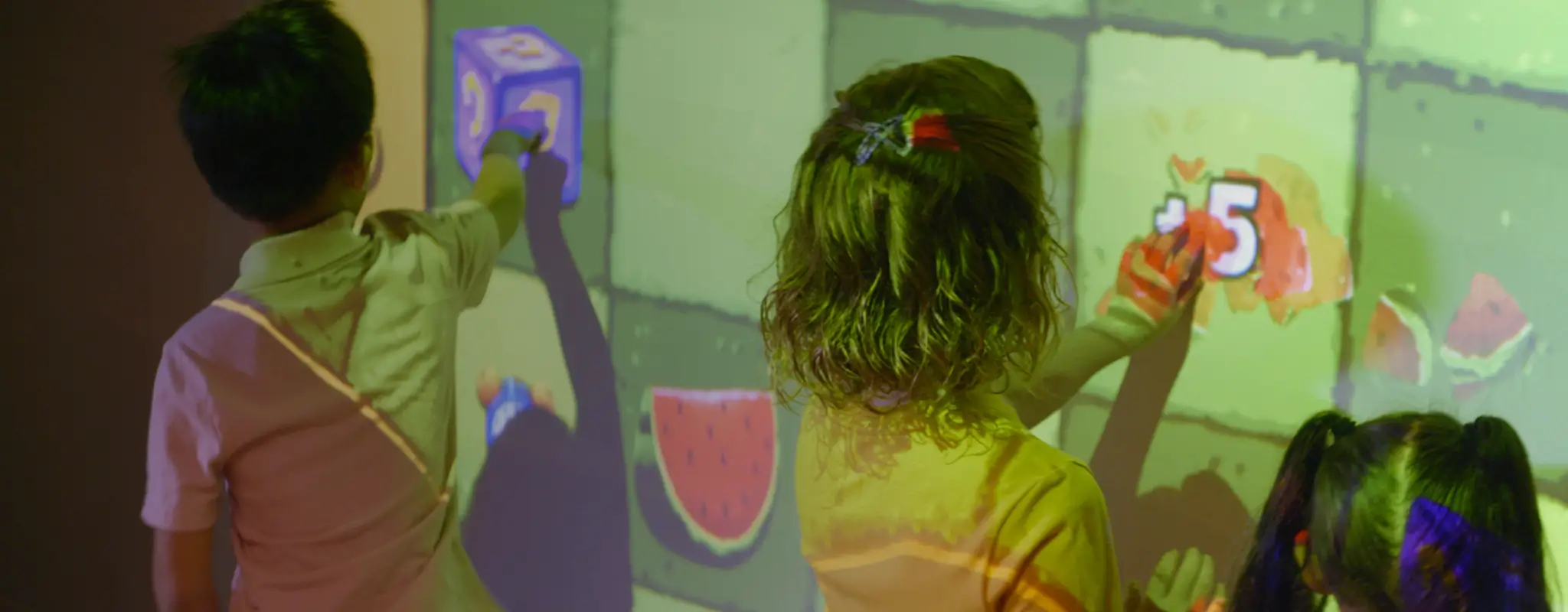
For small sensory rooms and classroom corners where construction is not an option, a portable interactive projector such as EyeClick's BEAM ($5,796) turns any floor into a motion-activated active zone in under 2 hours and moves between rooms.
The best sensory room ideas start with who the room is for and what you want it to do: calm an overwhelmed student, give a restless body a safe way to move, or bring a quiet group together. A 3 ft x 3 ft classroom corner, a converted closet, and a full immersive suite all follow the same design logic: control light and sound, give the body something to do, and keep the space predictable. This guide organizes ideas 4 ways: by space, budget, population, and goal, with rough costs for each.
What sensory room ideas work for each type of space?
Match the concept to the square footage you actually control: a calming corner needs about 9 sq ft, a closet conversion 20 to 50 sq ft, a dedicated room 100 sq ft or more, and a gym integration borrows space you already have.
| Idea / Space | Square footage | Typical budget | Anchor equipment |
|---|---|---|---|
| Calming corner | about 9 sq ft | $250-$600 | deep-pressure + visual focal point |
| Closet conversion | 20-50 sq ft | $500-$2,500 | controllable lighting + tactile |
| Dedicated room | 100+ sq ft | $3,000-$30,000 | passive suite plus 1 interactive anchor |
| Gym or multipurpose | borrowed space | varies | portable interactive projection (BEAM) |
Calming corner ideas (works inside any classroom)
A calming corner is a defined retreat inside a regular room: a visual boundary, soft seating, and a small menu of regulation tools. Start with a pop-up canopy or tent to mark the boundary, a beanbag, a bin of 6 to 10 fidget and tactile items, noise-reducing headphones, a feelings chart, and a visual timer so returns to class are predictable. Post simple rules: 1 student at a time, timer on, tools stay in the corner. Rough cost: $150 to $500 at typical online retail prices.
Closet and small-room conversion (small sensory room ideas)
A 20 to 50 sq ft closet or storage room converts into a genuinely effective sensory space if you solve light, air, and surfaces first. Confirm ventilation, replace fluorescent fixtures with dimmable LED lighting, lay mat flooring, and pad any edge a user can reach. Then add 1 visual anchor piece, typically a bubble tube or a bundle of fiber optic strands, plus labeled bins on a shelf so the small footprint stays uncluttered. Rough cost: $500 to $2,500 depending on how much of the work you do in-house.
Dedicated sensory room
With 100 sq ft or more, the strongest idea is zoning: divide the room into a calming zone and an active zone instead of filling it edge to edge. Build the calming half around padded flooring, blackout shades, adjustable lighting, a bubble tube with padded podium, and fiber optics; build the active half around movement, for example a ceiling-mounted swing on a professionally installed, rated mount and an interactive floor or wall projection area for cause-and-effect play. Leave open floor for movement; empty space is a feature, not wasted budget. Rough cost: vendor-published budgets for complete rooms run from roughly $3,000 to $30,000 or more depending on scope.
Gym and multipurpose-space integration
You do not need a permanent room: a portable interactive projector plus a mobile sensory cart turns a gym or multipurpose room into a scheduled sensory space in minutes. A portable unit such as BEAM projects motion-responsive games onto the floor, a wall, or a table, installs in under 2 hours with no construction, and rolls away when the period ends; published pricing starts at $5,796. Stock the cart with folding mats, a tunnel, balance items, and headphones, and post a booking schedule for fair access. See the interactive floor projector guide for how the projection piece works.
How much does a sensory room cost to build?
Realistic budgets run from under $1,000 for a strong calming corner to $50,000 or more for a fully built immersive room, and most schools and clinics land in between. Prices below are typical online retail as of June 2026 and will vary by vendor. For how schools and facilities actually pay for these budgets, see our sensory room funding guide.
Under $1,000: the starter setup
This tier funds a complete calming corner plus a few high-impact extras. A workable list: pop-up tent ($30 to $80), beanbag ($50 to $150), fidget and tactile bin ($30 to $60), 2 pairs of noise-reducing headphones ($20 to $50 each), a small set of liquid floor tiles ($30 to $80), a battery-powered star projector ($20 to $40), a visual timer ($25 to $40), and a weighted lap pad ($25 to $60). Total: roughly $250 to $600.
Under $10,000: the serious single room
This tier buys the closet or small-room conversion plus 1 or 2 anchor pieces that define the space. Commercial-grade options include a bubble tube with padded podium (roughly $500 to $2,500), a fiber optic kit (roughly $300 to $1,500), and a sensory swing with a professionally installed rated mount (roughly $200 to $700 plus installation). If group engagement is a priority, an interactive floor projection system starting at $5,796 adds an active, no-touch play zone that engages a small group at once rather than 1 child at a time.
Full build: $10,000 to $50,000 and up
A full build adds professional design, integrated control, and immersion: wall-to-wall padding, vibroacoustic furniture, scene-switching so staff change the whole room's lighting and sound with 1 control, and floor or wall projection sized to the room. Interactive projection projects typically fall in the $5,000 to $50,000 range depending on scope. At this tier, pay for design time before equipment: a well-sequenced $25,000 room outperforms a $50,000 equipment pile.
What are the best sensory room ideas for autism support?
The most effective sensory rooms for children and adults on the autism spectrum are predictable and controllable, designed around each person's individual sensory profile rather than a standard shopping list. Sensory preferences vary widely from person to person, so involve an occupational therapist in the equipment list and observe how each user actually responds. These 5 ideas consistently earn their place:
- Put the controls in the user's hands. Dimmer switches, a remote for the bubble tube's color, and a simple choice board give the user agency over their own input; many people settle faster when they control the room instead of receiving it. Rough cost: $50 to $200.
- Build a deep-pressure retreat. A compression pod or pea-pod seat, weighted lap pads, and a crash mat give strong proprioceptive input in a defined safe spot. Rough cost: $100 to $600 per piece.
- Offer supervised vestibular input. A platform or pod swing on a professionally installed, weight-rated mount supports regulation through movement; set duration and supervision rules with your occupational therapist. Rough cost: $200 to $700 plus mounting.
- Use predictable cause and effect. Interactive projection responds instantly and consistently to movement: step on a virtual pond and it ripples, every time. That predictability rewards exploration without surprises, the play is no-touch for users who find shared touch surfaces difficult, and it scales from 1 child to a small group.
- Change 1 thing at a time. Introduce new equipment singly, keep the layout stable, and post a visual schedule at the door so the room itself never becomes the source of overload.
How do sensory room ideas change for ADHD, dementia care, and general classrooms?
Same toolbox, different emphasis: ADHD setups prioritize movement and heavy work, dementia care prioritizes familiarity and safety, and general-education rooms prioritize fair access and simple supervision.
Sensory room ideas for ADHD
Lead with movement: a short circuit of scooter board, balance beam, and wall push-offs gives the heavy work many students with ADHD need before they can settle. Add wobble stools or rocker seating, a visual timer, and short scheduled rotations of 5 to 10 minutes rather than open-ended sessions. An active projection game zone works as a gross-motor reset: chasing and stomping targets burns energy in a structured way. Rough cost: $300 to $1,000.
Sensory room ideas for dementia and senior care
For older adults living with dementia, design for familiarity, dignity, and fall safety rather than novelty. Strong ideas: a reminiscence shelf with tactile fabric books and memory boxes, warm adjustable lighting with familiar music, chairs with arms, secured cables, and high-contrast edges. Interactive projection fits naturally in senior care: it projects onto tables and floors where groups already gather, play is no-touch (valued for infection control), and EyeClick's senior library includes 100+ games designed for older adults. Rough cost: $500 to $2,000 for the reminiscence and lighting layer, with projection systems from $5,796.
Sensory room ideas for schools (general education)
The pattern that works district-wide is 1 calming corner in every classroom plus 1 shared sensory room with a booking schedule, so regulation support is always 30 seconds away and the bigger room stays available for higher needs. Track usage with a simple sign-in sheet and a before-and-after self-rating so you can show impact at budget time. If the shared room includes a projector, an education platform such as EyeWiz runs thousands of learning activities built from templates, so the room serves lessons as well as sensory time, which is often what wins the budget.
Should your sensory room be calming or alerting?
Both: the most useful sensory rooms separate a calming zone from an alerting zone, physically or by schedule, because mixing the 2 undermines each.
Calming zone ideas: dim, warm, adjustable light; slow visuals such as a bubble tube on a gentle color cycle; deep-pressure tools; low or no sound; a muted color palette. The goal is to lower input, so resist adding equipment to this side.
Alerting and active zone ideas: high-contrast colors, moving targets, balance and climbing elements, and upbeat music. Interactive floor and wall projection fits naturally here: games that reward jumping, stomping, and chasing give structured alerting input for groups with no shared handheld equipment. In shared facilities and healthcare settings, that no-touch design also cuts the cleaning load between sessions.
If 1 room must do both jobs, separate by schedule and use a consistent transition cue, such as a lighting scene change plus a 2-minute timer.
How do you plan a sensory room? A 10-point checklist
Work through these 10 questions before buying anything.
- Who is the room for, and which specific needs should it serve? Write it down.
- Have you consulted an occupational therapist (or your therapy team) on the equipment list?
- Does the location have controllable light and sound, away from high-traffic noise?
- Are there enough outlets where the powered equipment will sit?
- Is everything safe: furniture anchored, hard edges padded, swing mounts weight-rated and professionally installed, clear sight lines for supervision?
- Are surfaces cleanable? In clinics and care settings, favor wipeable and no-touch options over plush ones.
- Is there storage? Rotating items in and out preserves novelty without clutter.
- What are the access rules: booking schedule, supervision requirements, maximum occupancy?
- Does the budget cover installation and replacement of consumables, not just equipment?
- How will you measure use and impact? A usage log plus a simple before-and-after check, reviewed quarterly, protects next year's funding.
Frequently asked questions
How much does it cost to build a sensory room?
What should every sensory room include?
What funding can schools use to build a sensory room?
What is the difference between a sensory room and a calming corner?
What is a Snoezelen room?
Is an interactive projector worth it in a sensory room?
How do you keep a sensory room hygienic?